Portfolio news
Why we invested in Area2: Building the Human Presence Layer for AI

The challenge
Every major platform is building AI that acts for us, in our inboxes, our code and our files, on our phones and laptops. It knows the business, the documents and the task. It still doesn't know the person. An assistant will hand a forty-step plan to someone with thirty seconds of attention left, or ask for approval on an irreversible action from someone who isn't really there. It guesses from the words we type, and words are a poor proxy.
As models converge in capability, the scarce input is the human. AI will be limited less by compute than by the attention of the people it serves, and the systems that win will be the ones that can sense it.
The Human Presence Layer
Since our investment, Area2 has built that input.
Area2 senses how a person is engaging from how they type, never what they type. The sensing runs on the device and captures no content. The result is a live signal, which Area2 calls Presence, that reaches the model before it writes its first token. Presence works with open or closed models, local or cloud, with no retraining, and integrates through an SDK and MCP server.
That makes Presence a layer every part of AI can build on. Device makers can bring it to the hardware people already use, frontier labs can condition their models on it, and applications can fit each answer to the person in front of them. Agents gain the most, whether they write code, carry out work across a team's tools or act as someone's personal assistant. An agent that knows its human's moment can offer a short review instead of a long explanation, ask for explicit confirmation before a consequential step, or hold a decision until the person is ready to make it.
Picture a developer supervising three coding agents while switching between a production incident and Slack. A conventional agent sees only the last instruction and returns a long plan for review. An agent with Presence recognizes that the human is engaged but overloaded: it surfaces the one decision that cannot wait, summarizes the rest in three lines, and pauses the irreversible change until the developer is ready.
Same model. Same task. Different understanding of the person.
The early results are why we are more convinced now than when we invested. In more than 2,000 rated comparisons, real users compared responses generated with and without Presence and preferred the Presence-informed response 86% of the time. Sessions with Presence used 24% fewer tokens, and people reported completing their task 83% of the time, against 54% without it. On a phone, the signal arrives in a median of 6.3 milliseconds.
Built on deep science
Area2 began as research at MIT showing that the way people interact with their devices reveals how they are engaging, moment to moment. Dr. Teresa Arroyo-Gallego carried that work from the lab into the company. The research behind Area2 spans more than 20 peer-reviewed publications.
Turning that science into a signal others can build on took rigorous validation and 36 million neuromaps, and it is protected by 8 issued patents. The large platforms have the interaction data. Area2 has the validated mapping from that data to the human.
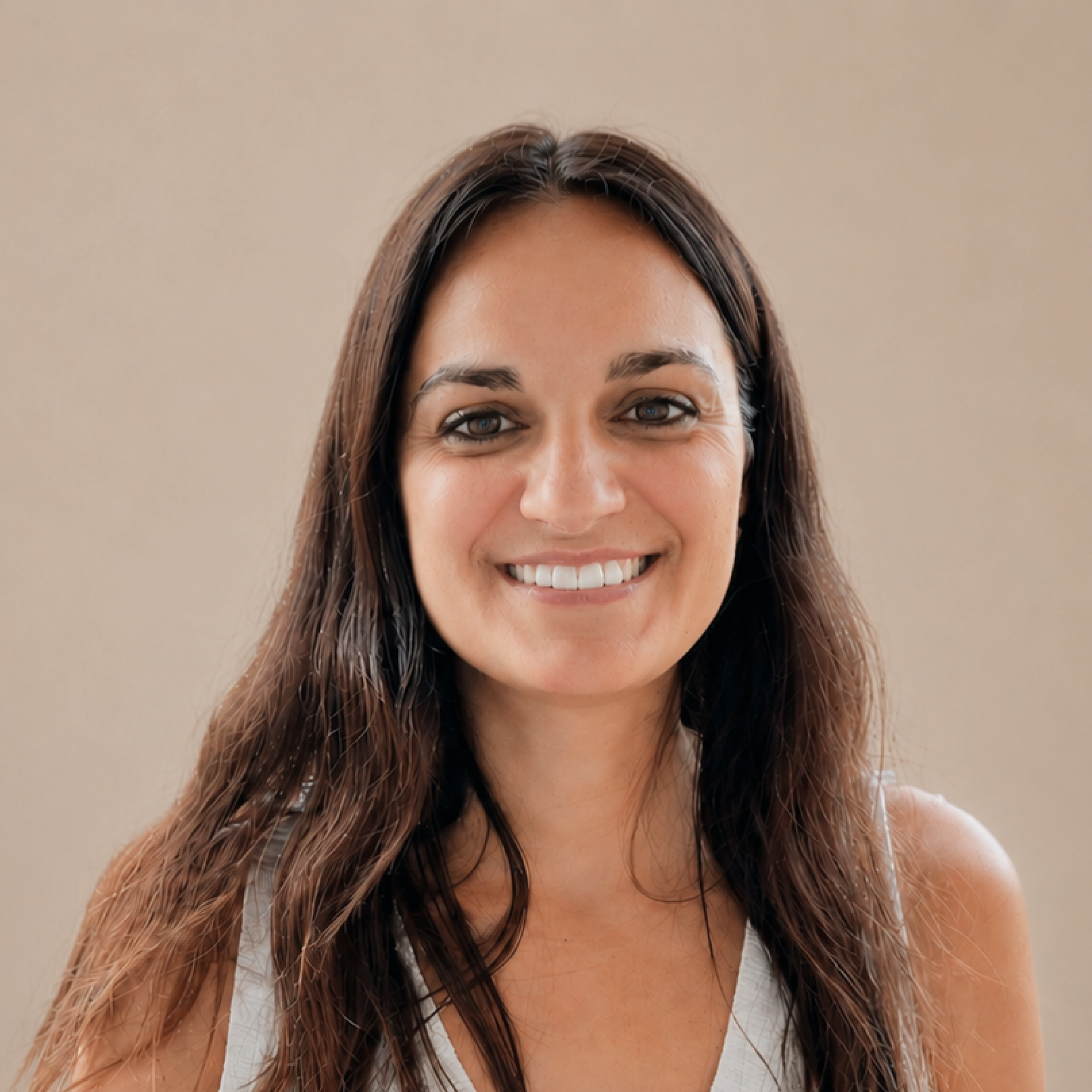
Teresa earned her PhD at the Universidad Politécnica de Madrid, with doctoral research at MIT, and was named to MIT Technology Review's Innovators Under 35 Europe. She co-founded Area2 with Mark Pascarella, a four-time founder and two-time CEO. The team works from Madrid and Cambridge, Massachusetts.
"Every AI system that acts for a person will need to know that person's state," Teresa told us. "We've made that signal real: validated, private and fast enough to sit under any model. Intelligence is a commodity. Connection is the moat."
What's next for Area2
Area2 is opening Presence, by invitation, to a small group of researchers and builders working on agents, from personal assistants to the work agents that increasingly act on people's behalf. Coding agents are the first use case, today's clearest example of AI outrunning human attention. Devices, frontier models and everyday applications follow. Researchers and teams interested in early access can request an invitation.
The Adara view
The pattern we look for is deep, proven science meeting a market that suddenly needs it. Area2 is that pattern. It also sits squarely in what we call Trusted AI Infrastructure: the sensing runs on the device and captures no content, and the validated mapping from interaction data to human state is a proprietary asset that the large platforms can't simply replicate. We led its pre-seed alongside AI Operators Fund and individual investors because we believe AI will need more than better models. It will need a better connection to the people it serves.
We're thrilled to keep backing Teresa and the Area2 team as they build that connection.
Learn more about Area2: https://area2.ai/